Building Lives, Brick by Brick: Understanding the Concept of Persons Behind Bars Reintegration

In any society, it is crucial to address the reintegration of individuals who have been deprived of their liberty. Often overlooked, this aspect plays a fundamental role in rehabilitating and transitioning former persons deprived of liberty (PDLs) back into the community. By understanding the importance of reintegration and implementing comprehensive support systems, we can break the cycle of recidivism and promote an inclusive society.

The concept of reintegration for persons behind bars is an essential aspect of promoting rehabilitation and nurturing a more inclusive society. It involves providing support, resources, and opportunities to individuals who have served their sentences, with the aim of facilitating their successful reintegration into the community. By understanding the significance of reintegration and its impact on reducing recidivism rates, we can break down barriers and build a strong foundation for the transformation and growth of formerly incarcerated individuals.

Reintegration programs such as HLAF’s Focused Reintegration of Ex-Detainees (FRED) Program are key when it comes to successfully reintegrating former prisoners. The FRED program offers a range of resources and support services, including formation sessions, counseling, peer-to-peer support, and access to education, livelihood, and employment opportunities. By equipping former PDLs with necessary life skills, we increase their chances of finding stable employment and housing, for instance, reducing their likelihood of reoffending.

Breaking the Cycle of Recidivism

The primary objective of reintegration is to break the cycle of recidivism, where individuals repeatedly engage in criminal behavior. By addressing the underlying factors that contribute to criminal activity and providing specialized support, we can help individuals rebuild their lives and make positive choices that lead to long-term success.

Addressing the root causes that led to incarceration is equally important. Many individuals who have been deprived of their liberty face multiple barriers, such as a history of substance abuse, mental health issues, or lack of education. Reintegration programs should focus on addressing these underlying issues and providing tailored support to help individuals rebuild their lives and make positive choices in the future.

However, successful reintegration goes beyond just the individual. Society must recognize the importance of reducing the stigma associated with former prisoners. Negative stereotypes often hinder their chances of finding employment, housing, and establishing healthy relationships. By fostering a more inclusive and understanding society, we create an environment where former prisoners can reintegrate without facing unnecessary barriers.

Tailored Support and Services | Collaborative Efforts

Collaboration between various stakeholders is also crucial. Government agencies, community organizations, and employers all have a role to play in supporting the reintegration process. HLAF sees that by working together, we can create a comprehensive support system that caters to the specific needs of individuals, thus increasing their chances of successful reintegration.

From HLAF’s experiences, successful reintegration requires a collaborative approach involving multiple stakeholders, including government agencies, community organizations, employers, and the justice system. By working together and sharing resources, expertise, and knowledge, we can create a comprehensive and seamless reintegration process that maximizes the chances of success for individuals transitioning back into society.

Investing in the reintegration of former persons deprived of liberty benefits not only the individuals directly involved but society as a whole. By successfully reintegrating former prisoners, we reduce the burden on the criminal justice system, increase public safety, and contribute to a more stable and cohesive community.

Fostering Social Support Networks

Reintegration goes beyond providing immediate support; it involves building lasting social connections that contribute to a healthier and more positive environment for individuals transitioning from behind bars. By facilitating the development of supportive networks, such as mentoring programs and community partnerships, we can ensure a strong support system is in place to assist individuals in overcoming the challenges they may face upon reentry.

Overcoming Stigma and Promoting Inclusion

One of the biggest hurdles faced by formerly incarcerated individuals is the stigma associated with their past. Society often places limits on opportunities for employment, education, and housing, leading to further marginalization and exclusion. It is crucial to address these societal biases by raising awareness, promoting understanding, and fostering a more inclusive and accepting community. Building a society that embraces the notion of second chances is vital for successful reintegration

Addressing the reintegration of former persons deprived of liberty is of utmost importance. Through comprehensive support systems, focusing on underlying issues, reducing societal stigma, and fostering collaboration, we can break the cycle of recidivism and promote a safer and more inclusive society. It is an investment worth making, as the benefits extend far beyond the individuals directly involved.

Our call

Understanding and embracing the concept of reintegration not only benefits the individuals directly involved but also contributes to a safer, healthier, and more inclusive society as a whole. Together, let’s commit to building strong, supportive foundations that help individuals behind bars find hope, purpose, and a path to a brighter future.

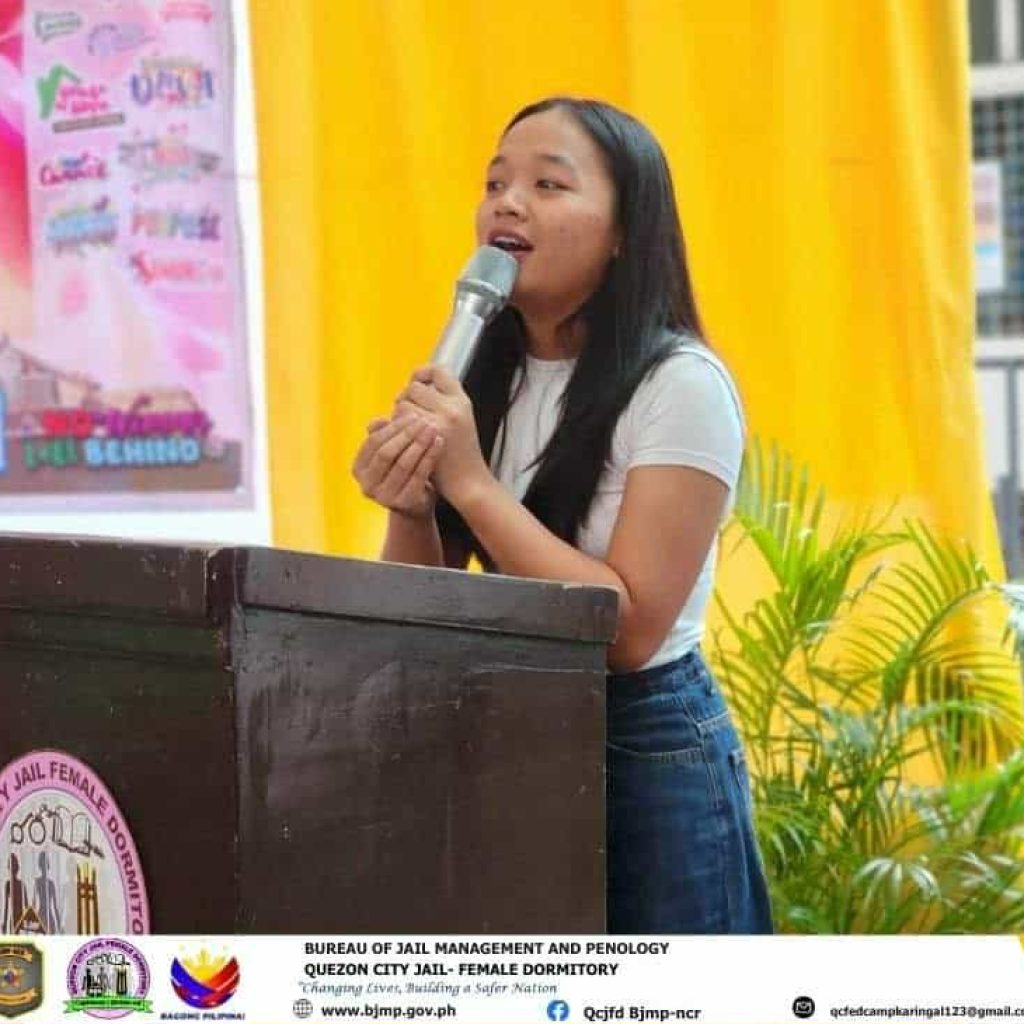
Janessa Xylene Macaraig Communications and Advocacy Associate

Janessa Xylene Macaraig | Communications and Advocacy Associate

Janessa Xylene Macaraig is a graduate of Bachelor of Science in Development Communication from Batangas State University – The National Engineering University, where she earned the distinction of Cum Laude.

Throughout her academic journey, she has been an active student leader, sharpening her skills in leadership, public speaking, and strategic communication. Her involvement in organizing and spearheading impactful initiatives reflects her strong commitment to driving positive change within communities.

Janessa currently serves as the Sangguniang Kabataan Secretary in her barangay, where she plays a key role in community engagement, youth empowerment, and stakeholder communications. This position has further strengthened her capabilities in local governance and grassroots mobilization.

She also completed her internship as a Communications and Advocacy Intern at the Humanitarian Legal Assistance Foundation (HLAF). This experience deepened her understanding of strategic communication and social advocacy, equipping her with the tools to support human rights initiatives.

Janessa is passionate about using the power of communication to inspire, inform, and create meaningful impact—whether through community work, advocacy, or development programs.

Jonathan Bantayan | Community Development Officer

Jonathan Agustin Batayan is a Bachelor of Science in Social Work graduate at the Pamantasan ng Lungsod ng Valenzuela (PLV), where he has been a consistent Dean’s Lister and active student leader. He currently serves as the Treasurer of the PLV–Junior Social Workers Association of the Philippines (2023–2024) and has experience as a community organizer in Sitio Cabatuan, Valenzuela City, and as a tutor under the DSWD Tara Basa! Program.

Jonathan has attended numerous seminars and workshops on child protection, gender and development, community extension, parole and probation social work, and sustainable livelihoods, reflecting his commitment to inclusive and rights-based social services. His academic achievements include graduating with honors in both junior and senior high school and earning recognition in creative writing and essay competitions.

Passionate about leadership, community development, and advocacy, Jonathan continues to hone his skills in critical thinking, social welfare practice, and communication. He envisions himself contributing to the advancement of social work in the Philippines, with a strong focus on safeguarding vulnerable groups and empowering communities.

Carmelita Torrefiel | Senior Community Organizer

Carmelita B. Torrefiel is the Senior Community Organizer for the Center for Restorative Action of the Humanitarian Legal Assistance Foundation, Inc. (HLAF), where she has also served as a Community Organizer and Training Facilitator since 2011. With over two decades of experience in community work, child protection, and restorative justice, she has dedicated her career to advancing the rights and welfare of children and women.

She previously served as the Barangay Council for the Protection of Children (BCPC) Focal Person and Violence Against Women and their Children (VAWC) Desk Officer in Barangay Bagbag, Quezon City, as well as a Project Officer at SAKLAW Foundation, Inc., and a Finance and Documentation Officer at Pax Christi Pastoral Center in Oriental Mindoro. Her extensive experience in grassroots and program management has strengthened local governance mechanisms, including Barangay Councils for the Protection of Children, and anti-VAWC initiatives.

Ms. Torrefiel has been invited as a resource speaker and facilitator by provincial governments, NGOs, academic institutions, and community organizations across the country, particularly on child protection laws, restorative justice, community organizing, and gender-based violence prevention. Her dedication has earned her multiple awards and citations, including the Service Merit Award (Gawad Lasalyano) from De La Salle University’s Center for Social Concern and Action (COSCA) in 2023.

She holds a BS Psychology degree from Arellano University under the Expanded Tertiary Education Equivalency and Accreditation Program (ETEEAP) and has pursued numerous professional trainings in leadership, social work, and community development.
Passionate about community organizing, public speaking, and advocacy, Carmelita continues to serve as a strong voice for restorative justice and the protection of vulnerable sectors in society.

Carmela Reyes | Program Officer

Carmela serves as Program Officer at the Humanitarian Legal Assistance Foundation, Inc. – Center for Restorative Action Program, where she provides technical assistance and develops policy recommendations for psychosocial programs benefiting vulnerable communities.

She has extensive experience in social work practice through her internships at the Quezon City Social Services Development Department, where she worked with children in conflict with the law, as well as with persons with disabilities in community organizing and capacity-building initiatives.

Juanito Vinluan Jr. | Program Officer

Juanito S. Vinluan Jr. is a licensed social worker and Program Officer for the Jail Decongestion Program of the Humanitarian Legal Assistance Foundation, Inc. (HLAF). He earned his Bachelor of Science in Social Work from the Pamantasan ng Lungsod ng Maynila (2003) and became a registered social worker in 2005. He later pursued law studies at the Philippine College of Criminology – Manila Law College, where he attained his Juris Doctor degree in 2012.

With more than a decade of experience in social work, paralegal assistance, and program management, Juanito has contributed to HLAF’s initiatives such as the Focused Reintegration of Ex-Detainees (FRED) Program and Jail Decongestion (JD) Program, the implementation of the Detainees’ Notebook, and the development of paralegal handbooks in partnership with various institutions. He has also served as a co-facilitator and mentor for law internship and clinical legal education programs in partnership with Ateneo, San Beda, UST, and other law schools nationwide.

Before his work in HLAF, he served as a Medical Social Welfare Officer at East Avenue Medical Center for six years, and gained private sector experience with UNILAB and other pharmaceutical companies.

Married and a father of four, Juanito balances his professional role with his commitment to family life, faith, and service. His career reflects his dedication to social justice, access to legal aid, and the welfare of persons deprived of liberty.

Rubelin Rivera | Finance and Administrative Assistant

Rubelin L. Rivera is a young professional with a background in Business Administration, majoring in Marketing at the Nueva Ecija University of Science and Technology. With experience as a cashier, human resources assistant, and office clerk in both government and private institutions, she has developed strong skills in communication, adaptability, and time management.

She has served as a Logistics/Office Clerk at GreatHope General Services Inc., and continues to build her career in administrative and organizational support while aspiring to further expand her knowledge and professional growth.

Sharmaine Jintalan | Finance, Administrative, and Personnel Officer

Sharmaine P. Jintalan is a dedicated and detail-oriented professional with extensive experience in finance, administration, inventory management, and IT support. She holds a degree in Information Technology from Speed Computer College, where she was a consistent Dean’s Lister, and is currently pursuing a Bachelor of Science in Accountancy to further enhance her expertise in the field.

With a solid background in accounting, warehouse coordination, and office management, Sharmaine has successfully contributed to the operational and financial efficiency of various organizations, including the Humanitarian Legal Assistance Foundation and HMR Trading Haus Philippines. She is proficient in QuickBooks, Microsoft Office Suite, and various inventory and documentation systems.

Her experience spans financial reporting, payroll processing, inventory control, and technical support, reflecting her versatility and reliability in both office and field settings. Sharmaine also holds certifications in Computer Hardware Servicing (NCII) and has completed numerous workshops in accounting, taxation, and BIR compliance. Committed to continuous learning and professional growth, Sharmaine brings a strong work ethic, accuracy, and a proactive mindset to every role she takes on.

Ma. Cristina Belardo | Legal and Policy Director

Ma. Cristina S. Belardo is a dedicated lawyer with a strong background in human rights, litigation, legal policy, and academia. She assists in the development and implementation of strategic plans, provides leadership and support to staff, and ensures alignment with the organization’s mission. In this capacity, she develops and implements comprehensive legal policies, conducts research and advocacy, and engages in participatory governance for policy development.

She actively participates in Technical Working Groups, contributing to policy development and analysis on issues concerning Persons Deprived of Liberty (PDLs), Persons Released on Recognizance (PRLs), Children-at-Risk, and Children in Conflict with the Law. She also serves as a lecturer for paralegal training, focusing on laws affecting PDLs, women, and children.

In academia, Atty. Belardo is a part-time lecturer at Forbes College, teaching Criminal Law, Criminal Procedure, and Evidence. She develops and updates course syllabi and learning materials in alignment with academic standards, contributing to the formation of future criminology and law professionals.

Her corporate legal experience includes serving as Assistant Corporate Secretary for Forbes College, Inc. and Forbes Academy, Inc., where she ensures compliance with SEC requirements, manages corporate records, and prepares legal documents. She also held the position of Compliance Officer, where she developed institutional policies, investigated compliance complaints, mediated disputes, and supported accreditation reviews to uphold ethical and legal standards.

Melvin Nunez | Strategic Social Behavior Change Communications and Advocacy Officer

Melvin leads the Strategic Communications and Social Behavior Change team of HLAF.

Melvin is trained and has expertise in Social Behavioral Change Communication, Development Communication, Journalism, Community Organizing, Community Development, Storytelling, Monitoring, Evaluation, and Networking.

He holds a Bachelor of Science degree in Development Communication from Batangas State University and is currently pursuing his Master of Arts in Communication at the Asian Institute of Journalism and Communication (on-going thesis).

He has been involved in international and local human rights certifications from the United Nations Office on Drugs and Crime & Dangerous Drugs Board, Philippine Press Institute, Asian Institute of Journalism and Communication, UNESCO Jakarta, the Embassy of Netherlands, Philippine Center for Investigative Journalism, Office of the United Nations High Commissioner for Human Rights, Ateneo de Manila University, University of the Philippines, and the Commission on Human Rights.

He was a consultant to various local government and non-governmental organizations, including Caritas Manila, Plan International, the Local Council for the Protection of Children Consortium, the Department of the Interior and Local Government, the Commission on Human Rights, the Coalition Against the Death Penalty, Batangas State University, and the Philippine Press Institute, among others.

As the Social Behavioral Change Communication and Advocacy Officer, Melvin has played a crucial role in crafting impactful communication strategies that inspire positive change and amplify advocacy efforts. His work involves designing and implementing communication campaigns that promote driving social behavioral transformation.