“Women in prison are often invisible to society, but they are human beings with stories, families, and dreams.” – Angela Davis
In 2020, the Human Rights Watch reported that the Philippines has the most congested penal system in the world. The Bureau of Corrections recorded a total congestion rate of 301% as of January 2021, which indicates that the 7 Bureau of Corrections facilities are holding four times more inmates than their total capacity can handle (Human Rights Watch, 2020). Moreover, according to criminal justice expert Raymund Narag, female detention centers are more crowded than their male counterparts (Abad, 2021).
Prisons are often associated with darkness, despair, and loss of freedom. However, within the walls of correctional facilities, there are countless stories of resilience, courage, and strength, especially among women. Behind the steel bars and concrete walls, there are remarkable women who defy the odds, navigating challenges with unwavering determination, and showcasing extraordinary resilience.
Given the opportunity to correspond with remarkable women and shed light on their stories of fortitude, resilience, and empowerment amidst the challenges, this article will delve into their lives and experiences. Furthermore, these women are not just PDLs, but individuals with qualities that demonstrate unbreakable spirits even in the most challenging circumstances.
The global pandemic brought a pause to everyone’s lives, especially PDLs. According to Aey, a former PDL and FRED beneficiary, due to quarantine protocols, face-to-face visitations were suspended. Though the prison administrations were implementing E-Dalaws, the program only resumed in 2021. She was unable to see her family during the height of the pandemic where the disease was most dangerous to the population; stating, “Hindi namin nakikita kahit sa bintana lang kasi bawal pumasok sa campo. Ang pinaka-way makausap sa kanila is makiusap sa empleyado. Until ngayon di nakakapasok yung dalaw pag face-to-face may salamin tapos phone naguusap. “
The prison is usually expected to be a place for punishment and torment however, for the women PDLs, it can be a source of awakening and change. Former PDL and FRED beneficiary, Lulujane, states that her time in jail was a wake-up call for reinventing herself and atoning for her past mistakes. Her family playing a key role in her change, “Pero yung tiniis ka, gusto ka nila matuto which is depende po siguro sa tao.” Despite this experience, she bares no negative sentiments and vows to make up for her lost time with her family. Her patience and understanding are seen as her strengths.
Moreover, when asked to relive the moments of their release the former PDLs and FRED beneficiaries interviewed stated that not only they but also their families were happy for their return. Most were welcomed home by their parents, children, and friends. Some were even unused to the new changes in their life after prison but were overall happy to be back with their loved ones.
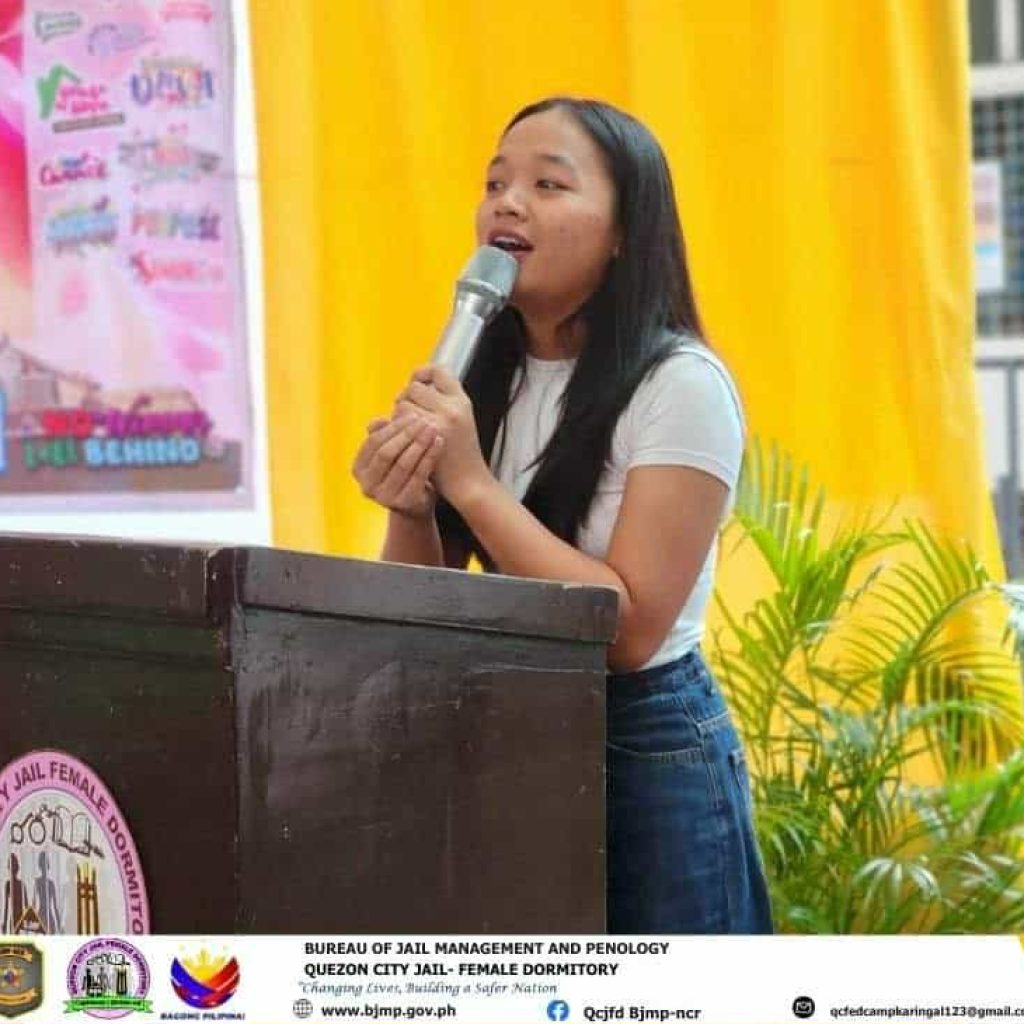
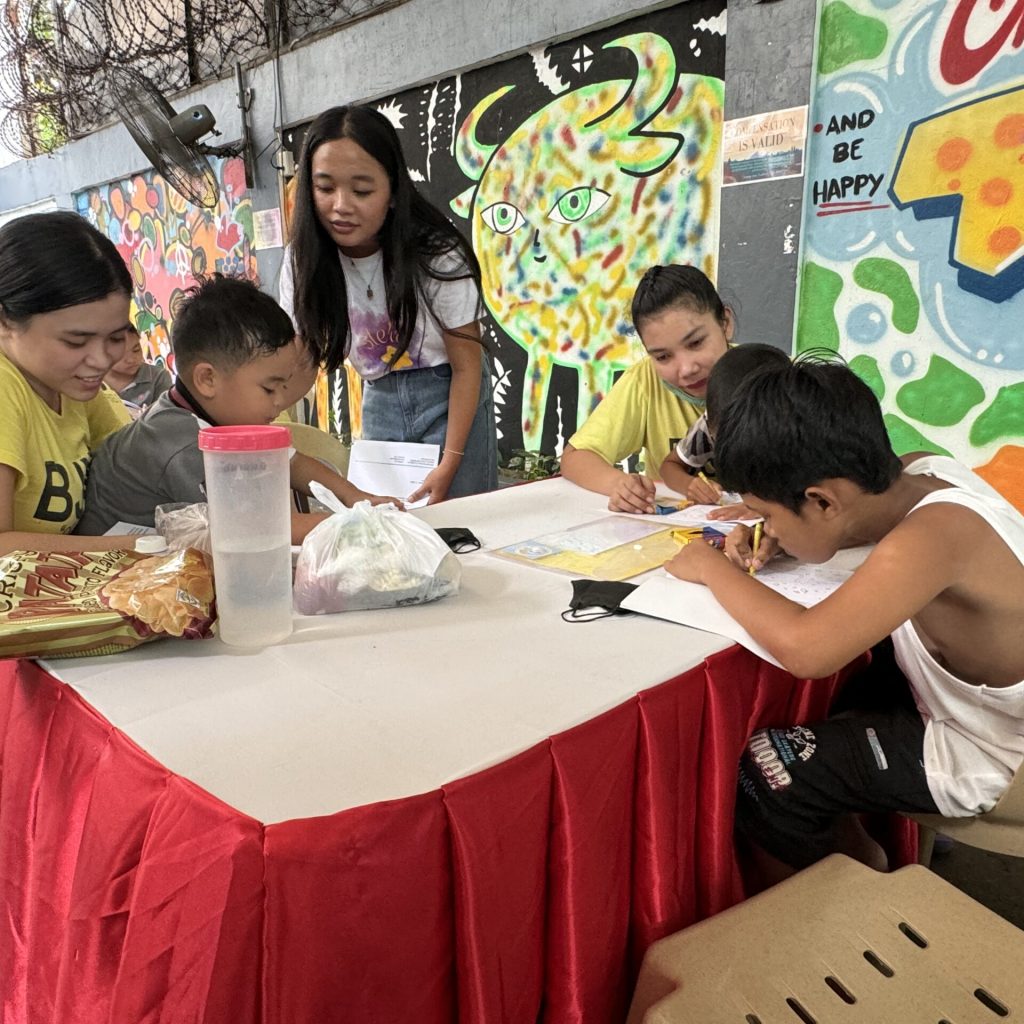
Being inside the jails and away from family, mothers cannot help but feel bad and guilty that they could not be with their children to witness them grow and be able to guide them in making the right decisions. In an interview with Loreline, one of the female PDLs in Quezon City Jail, she expressed her fear that her children may be exposed to bad influences from peers and she is not there to steer them from committing bad habits, “yung fear namin na wala kami sa tabi nila na lumalaki sila na naiimpluwensiyahan sila ng environment at barkada na walang magulang na natutuwid sa mali nila.”
Another sentiment came from the perspective of a daughter like Janine, another female PDL in Quezon City Jail, appreciating the support and sacrifices of her family on the outside and being grateful for stepping in for her role as a mother to her children and a sister to her siblings, “yung sakripisyo po ng mga magulang namin, imbes na kami po yung nakakatulong sakanila, iniintindi pa din po nila kami hanggang ngayon, pati mga anak at kapatid.”
Reconnecting with the family and making up for the lost time has been the biggest motivator and reason for every PDL to want to get out of jail and start a clean slate.
When Lulujane and Tolentino were released from jail, they expressed their gratitude for the FRED program for it helped them in their fresh start. Thanks to the program, former PDLs like them were able to gain knowledge and values that they could use to build a new life outside of prison. In terms of gaining knowledge, the interviewees gained information on how to start a business and find employment. One of the topics tackled was to start a business with a small capital and how to manage and grow it. Other skills taught by the program to aid their reintegration into society would be making empanadas and sardines.
When they were released from jail, however, they encountered the challenge of being stigmatized, stereotyped and discriminated against. However, the FRED program enabled them to gain confidence and gave them the inspiration to be a better individual. Based on Tolentino’s account, she stated “dahil po dun sa mga advices na yon pati po sa HLAF, nagkaron po ako ng sobrang lakas ng loob na magsimula ulit, na para patunayan sa mga tao na ito na yun eh, ito na yung pagbabago, ito na yung bagong ako.” Such testament shows the strength of Ms. Tolentino in proving to herself that she has what it takes to be a changed person after entering society. Another female ex-PDL, Lulujane, also expressed how she was able to overcome challenges in reintegrating into society with this statement, “tinuturo nila yung stigma, napakano yan eh, totoo yan. Wala po sila kaalaman at di nila alam ano pinagdaanan yung tao sa loob. Pero usually bakit ka nakapunta sa gantong sitwasyon, sana alam mo rin diba. At ngayon nandito kami, paano namin haharapin.”
The unwarranted stigma, prejudice, and discrimination that many former PDLs face upon reentering society can be a daunting challenge to overcome; however, these female interviewees prove that with guidance and help from family and organizations, they can transform themselves.
“I am not a product of my circumstances. I am a product of my decisions.” – Stephen Covey
Persons behind bars, even after being released, are vulnerable to discrimination and judgment by society. But we have to remember that they too are humans capable of change and goodness. Being an ex-PDL should not be an invisible nametag worn by these individuals 24/7, they can be and they are more than that previous circumstance of theirs. It should not be the defining factor of one’s entire personhood. They can change and become a better person, they can contribute to society, and they can share their skills and knowledge with the people around them; what they choose to do to better themselves should be what we look at. As what Tolentino has stated in explaining how she moved forward and showed her local community that she is beyond her past status of being a PDL, “di niyo kelangan i-judge yung mga tao porket galing sa loob… kasi lahat naman po pwedeng-pwede magbago.”
Persons who stand or once stood behind bars have experiences that people who have never been in a similar situation cannot fully understand, and that is why there is value in listening to their stories because it is through hearing these stories that we can connect with them as humans. The women PDLs that we had the opportunity to connect with have let us learn that even in challenging circumstances, they are individuals who are strong, with a lot to offer, and have valuable roles in society.
References
Abad, M. (2021, March 12). What you should know about women prisoners in the Philippines. Rappler. Retrieved April 19, 2023, from https://www.rappler.com/newsbreak/iq/things-to-know-women-prisoners-philippines/
Human Rights Watch. (2020, April 28). Philippines: Prison Deaths Unreported Amid Pandemic. Human Rights Watch. Retrieved April 19, 2023, from https://www.hrw.org/news/2020/04/28/philippines-prison-deaths-unreported-amid-pandemic